Barbarians at the Gate
A.D. 318-324
Barbarians at the Gate
A.D. 318-324
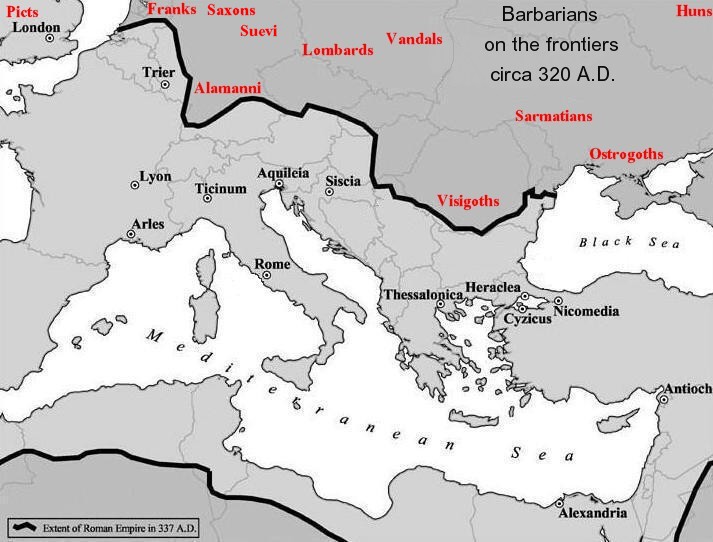
From A.D. 318-324, Constantine had barbarian troubles. The
Romans believed that anyone who could not read or write Latin
was a barbarian, so this meant there were a lot of barbarians!
There were many barbarous tribes spilling into the Roman Empire,
especially from what is present day Germany, but Constantine had
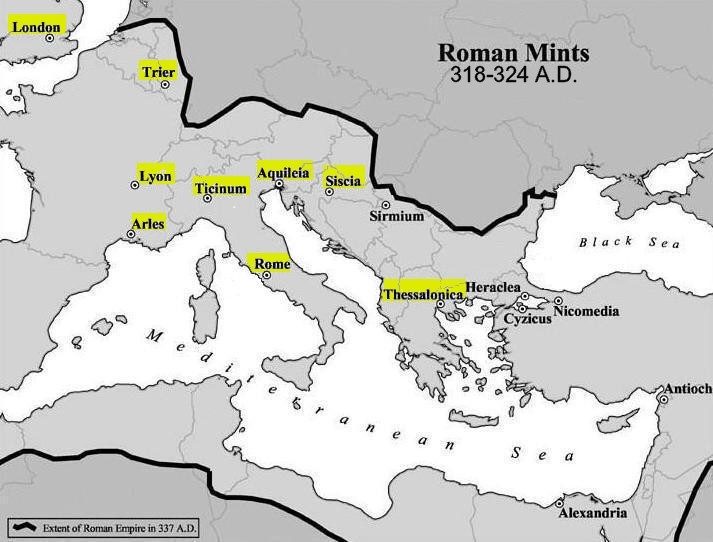
barbarians on all his frontiers.The coins issued from 318-324
tell the story of frontiers besieged by barbarians and also show
how Romans used propaganda on their coins.
 |
 |
 |
|
|
|
|
|
|
|
|
|
|
|
|
|
|
|
|
|
|
|
|
|
|
|
|
|
|
|
|
|
|
|
|
|
|
|
|
|
|
|
|
|
|
|
|
|
|
|
|
| Sarmatia |
323- 324 |
323-324 |
323- 324 |
323- 324 |
x |
x |
x |
x |
x |
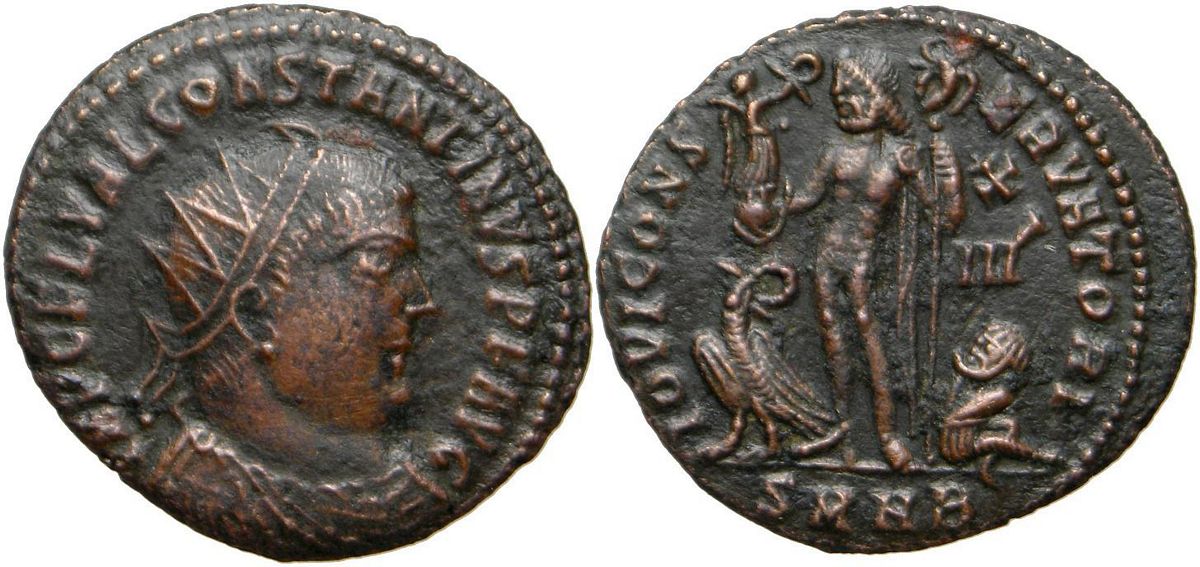
During these years, Licinius issued IOVI CONSERVATORI types from his mints.
In
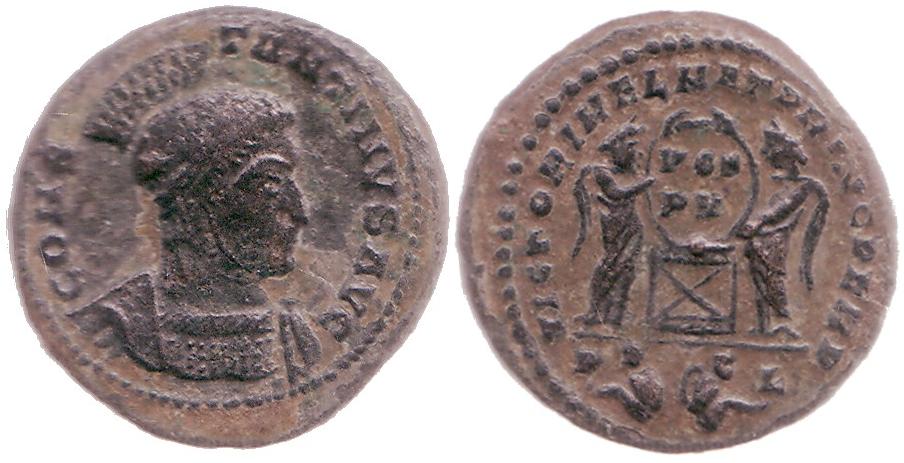
318, Constantine started issuing the VLPP series out of six of
his nine mints (Sirmium was opened in A.D. 320, but minted none
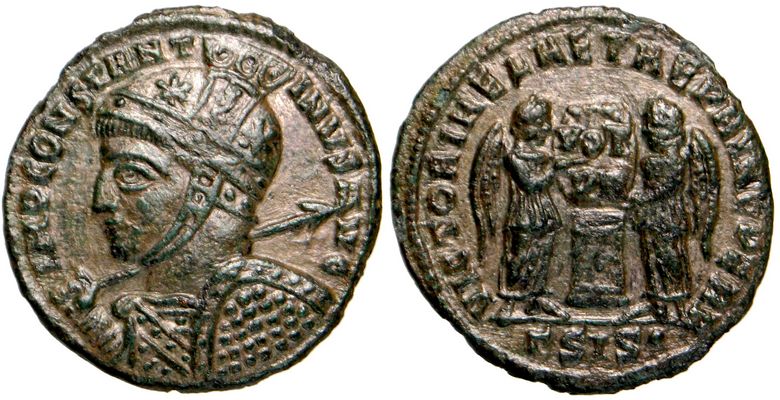
of the above coin types except for Sarmatia coins).The VICTORIAE
LAETAE PRINC PERP [ Joyous (well-earned) victory to the eternal
Prince] type usually depicted Constantine in armor and often
with spear and shield. The use of the word prince on the reverse
made reference to Constantine’s role as “Prince of Youth,”
a title he had claimed since his elevation to the rank of Caesar
in 306. Though the victory referred to must be in reference to
his recent war with Licinius, it might also reference some
barbarian troubles, as evidenced mainly by the Gallic mints.
 |
 |
|
2 captives back to back in exergue |
P [2 captives] L in exergue |
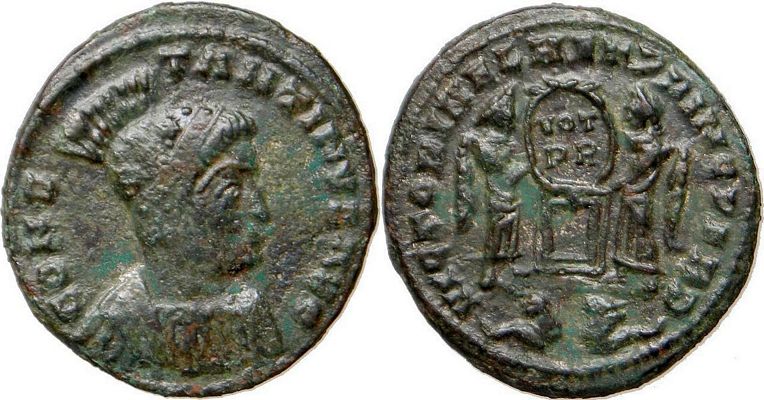
Some of the VLPP have two captives in the exergue. This coin was issued circa 320 A.D. in Lugdunum, or modern day Lyons (Lugdunum was named after the Celtic sun-god, Lug or Lugh).There was only one other mint that did this around the same time- Arles (Arles only used one captive). Both of these mints are in Gaul and were having problems with barbarians. Around this time Crispus, who was born in Gaul, was made commander of the armies in Gaul. Crispus was victorious in military operations against the Franks and Alamanni in A.D. 318 and 320. His, and Constantine II's, victory in 323 would be celebrated by the ALAMANNIA DEVICTA coinage. I don't think a specific victory over the barbarians is represented on these VLPP issues, but rather it is a little something to show for the years of fighting. The captives in the mintmark must have alluded to Crispus and his military operations against the Alamanni. Maybe they were meant to be a bit of a morale boost for the citizens- a little propaganda …. Rome was beating the barbarians!
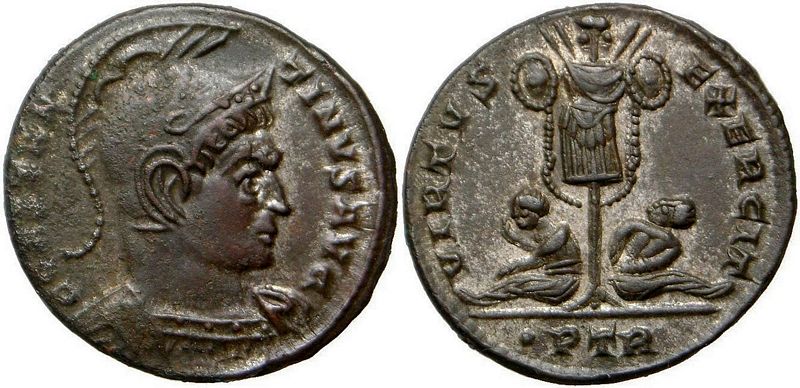
The VIRTVS issues started circa 319 in the same six mints plus two others. This type is definitely a military type- VIRTVS EXERCIT [Valor of the army] with the reverse showing two captives under a banner. The two captives on the reverse are also wearing pants, and only barbarians wore pants! In the late fourth century, legislation even banned the wearing of pants in the city limits of Rome- “Within the City of Rome no person shall wear either trousers or boots. But if any man after the issuance of this regulation of Our Clemency should obstinately persist in such contumacy, he shall be punished according as his legal status permits and expelled from our sacred City.” (Codex Theodosianus 14.10.3 June 6, 399)
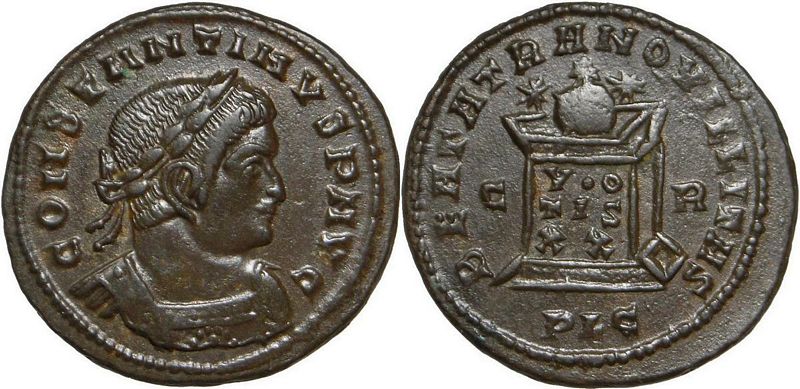
Circa 321, BEATA TRANQVILLITAS [Blessed Peace (calm)] type was issued. The reverse does mean blessed peace(calm), but it does not mean the Empire was at peace. The Rhine frontier was in turmoil. Rather than actual peace, these coins seem to be "an expression of the expectation of peace and order on the Rhine frontier." (RIC VII p 38) This series was issued around the same time as Constantine's war with the Sarmatians.
It is interesting that Rome never issued
any of these coins during the years 318-324, but that makes
sense because Rome was far from the frontier and did not
experience any barbarian invasions during these years. London,
Lyons and Trier issued all three of these coins and must have
had many problems with barbaric incursions. The London mint even
closed in 324 (Constantine was starting to shift his resources
and focus on the East). Lyons issued some coins in 324-5 and
then it closed until 330.
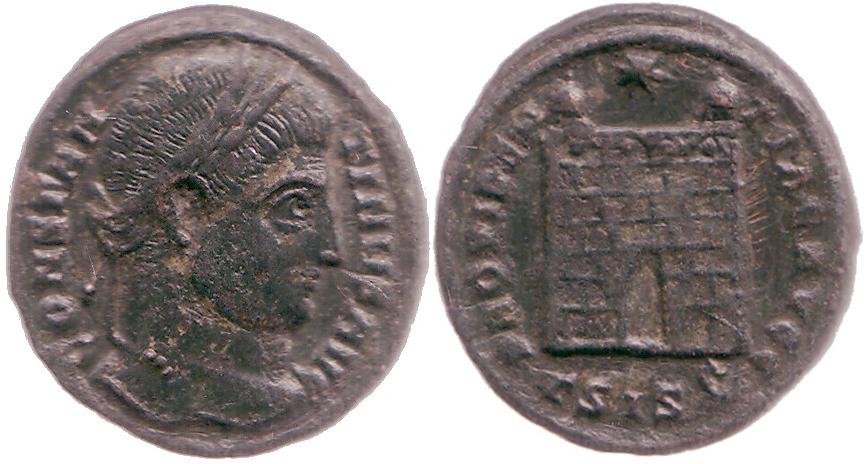
The campgate reverse replaced these types circa 324.PROVIDENTIAE AVGG [In honor of the foresight of the Emperors] seemed to imply Constantine had halted the barbarians...or at least he wanted his subjects to think so. Constantine by no means ended the threat of barbarian invasion by 324, but he did have some big victories.

Constantine defeated the Sarmatians in A.D. 322 (see above coin) Zosimus wrote about this--
“When Constantine learned that the Sarmatians, who live near Lake Maeotis, had sailed across the Danube and were pillaging his territory, he led his army against them…he killed many, took more prisoners and put the rest to flight.” Zosimus 2:21
This victory on the Danube frontier, was, however, a big
reason for the second civil war with Licinius in 324; since the
territory that Constantine fought the Sarmatians in was under
the control of Licinius.
The SARMATIA type was issued A.D. 323- 324 only for
Constantine from London, Lyons, Trier, Arles and Sirmium mints.
Below is an unofficial coin struck with an obverse of
Helena.
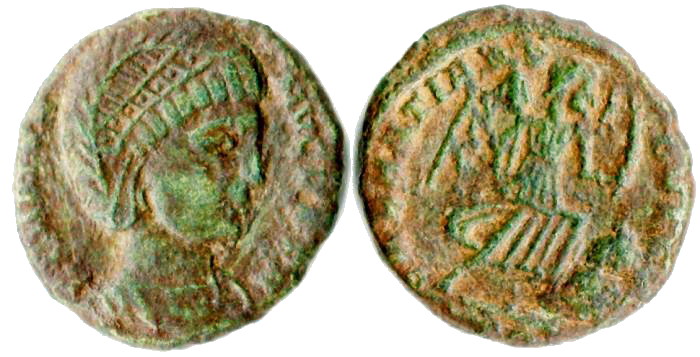
Helena
Circa A.D. 324
16x17mm 2.7gm
FL HELENA AVGVSTA;
diademed & draped bust right, hair in elaborate coiffure.
SARMATIA DEVICTA ;
Victory advancing r., holding trophy, palm branch, spurning
captive std. on ground to right
 |
 |
|
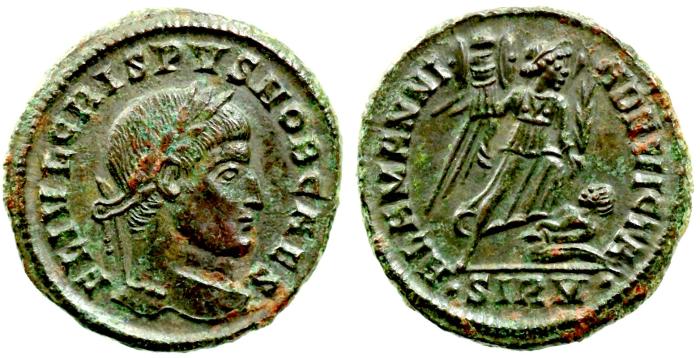
Crispus A.D. 324- 325 19mm 3.6gm FL IVL CRISPVS NOB CAES, Laureate head right. ALAMANNIA DEVICTA, Victory standing right, on bound captive with head turned to left, holding laurel branch and trophy. In ex. •SIRM• RIC VII Sirmium 49 |
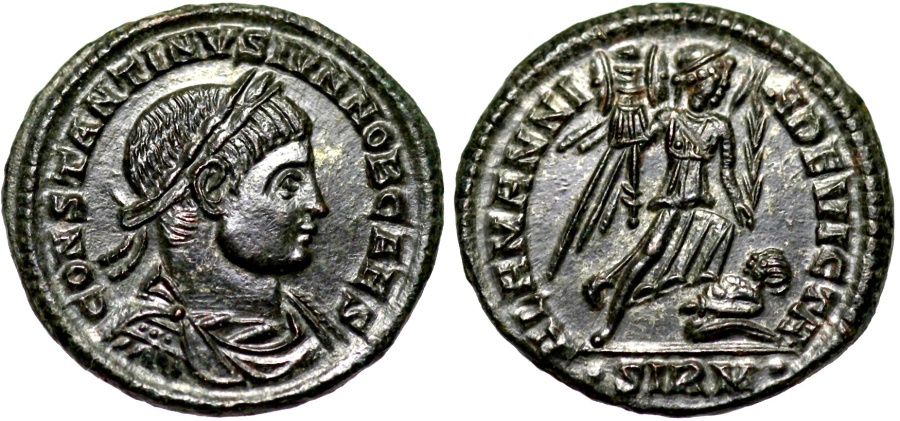
Constantine II A.D. 324- 325 18x19mm 2.8gm CONSTANTINVS IVN NOB CAES; Laureate draped and cuirassed bust right. ALAMANNIA DEVICTA; Victory standing right, on bound captive with head turned to left, holding laurel branch and trophy. In ex. •SIRM• RIC VII Sirmium 50 |
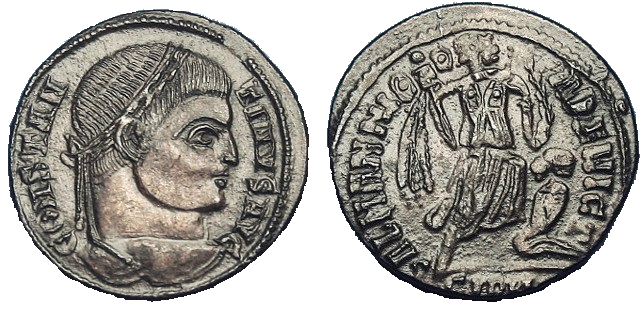
Constantine I
A.D. 324- 325
17mm 2.1gm
CONSTAN-TINVS AVG, Laureate bust right.
ALMANNI-A DEVICT, Victory standing right, on bound captive
with head turned to left, holding laurel branch and trophy.
In ex. SIRM
So Constantine had not completely pacified the barbarians by 324, as his PROVIDENTIAE coinage seemed to imply; but his attention was diverted by something more pressing...the second Civil War with Licinius. Shortly after the war, Constantine made his newly won city of Byzantium (soon to be called Constantinople) the capital of the Roman Empire. Constantine started sending funds and troops to the East. The fate of the old capital had almost been sealed by Constantine, and by the fifth century there was very little to stop the Germanic tribes from entering the West.
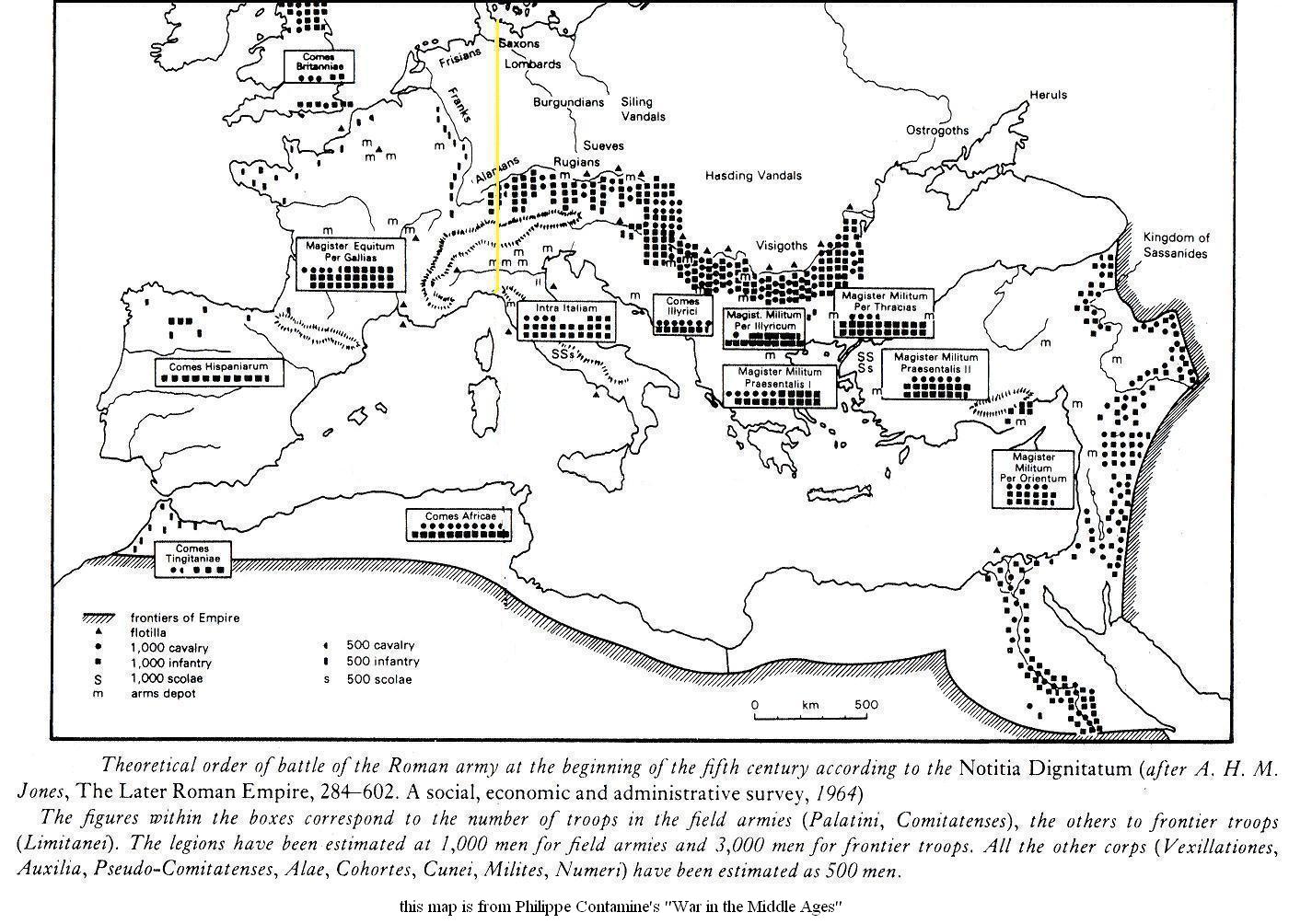
the map above shows how troops were moved to
protect the Eastern half of the Empire at the expense of the
Western Empire.
 Barbarous
issues
Barbarous
issues