Metallurgy
of
Constantinian "Bronzes"
Metallurgy
of
Constantinian "Bronzes"
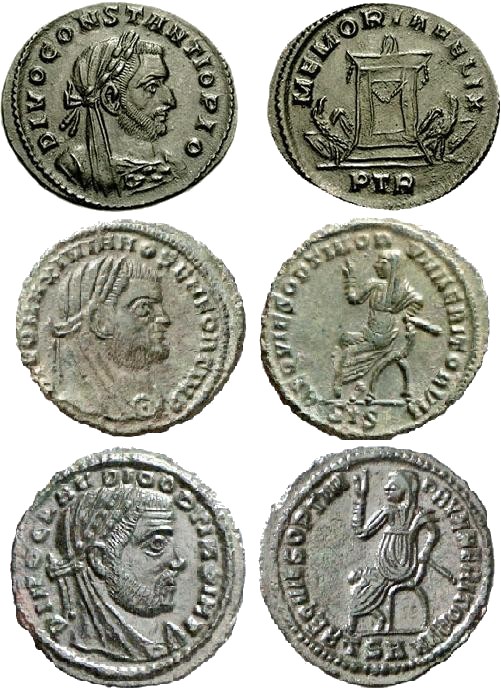
The bronze coinage of the Constantinian period from A.D. 307-348 should actually be thought of as a true silver denomination since these coins had carefully measured amounts of silver and quite often, a surface enrichment of silver.1 At the very least, these coins should be called argentiferous bronze coins! The percentage of silver during this period fluctuated from 1-5% silver, and varied from mint to mint. Fractional coinage always had less silver, and the commemorative fractions issued by Constantine in 317 had almost no silver. These coins had only trace amounts of silver-- 0.3% or less. The argentiferous alloys were comprised of mainly copper (Cu), lead (Pb), tin (Sn) and silver (Ag). Other impurities might include iron (Fe), nickel (Ni), cobalt (Co), zinc (Zn), gold (Au), arsenic (As), antimony (Sb), and Indium (In).2From A.D. 307-317, the amount of silver was circa 2-5%, and generally eastern mints had higher percentages of silver than the western mints, until Constantine became sole ruler of the Empire. From A.D. 318-320, there was circa 4% silver in the coinage. From A.D. 321-330, the silver content was circa 2%. After A.D. 330, the silver content was circa 1%, which was maintained until A.D. 341, when the silver dropped to less than 0.5%. Coins with only a trace amount of silver can no longer be thought of as argentiferous.3
Many argentiferous coins of this period exhibit
silvering on their surface. Through experimentation, some
possible methods of surface enrichment of silver have been
theorized.4 For flans with more than 5% silver, cold
hammering followed by annealing resulted in lead and
silver being forced to the surface. A dilute acid bath
("pickling") would give the flan a silvery surface. For
flans that contained less than 5% silver, a bath in molten
silver chloride displaced silver and deposited it on the
surface, which gave the flan a silvery wash. Hot working
and blanching prior to hot striking also enriched the
surface silver content. There are other ways a coin could
have a silvery surface. Corrosion may also promote a
silvery surface on a coin. Lead corrodes very easily, and
as it is displaced, silver can be deposited on the
surface. Various methods in the cleaning process can
also give a coin a silvery appearance, such as heating a
coin or even washing a coin. Lead can be removed by
prolonged washing, leaving more silver on the surface.5A recent study of the same coins analyzed by
Cope showed that the silvering often contained mercury.
Experiments were performed with a silver-mercury amalgalm
and various heating cycles. Copper sheets were coated with
silver-mercury pastes and heated. The alloy that best
withstood the 600 degree temperatures had 62% mercury and
38% silver.6
Analysis of the Composition of Alloys7
|
|
|
|
|
|
|
|
|
|
|
|
|
|
|
|
|
|
|
|
|
|
|
|
|
|
|
|
|
|
|
|
|
|
|
|
|
|
|
|
|
|
|
|
|
|
|
|
|
|
|
|
|
|
|
|
|
|
|
|
|
|
|
|
|
|
|
|
|
|
|
|
|
|
|
|
|
|
|
|
|
|
|
|
|
|
|
|
|
|
|
|
|
|
|
|
|
|
|
|
|
|
|
|
|
|
|
|
|
|
|
|
|
|
|
PRINC PERP |
|
|
|
|
|
|
|
|
|
|
|
|
|
|
|
|
|
|
|
|
|
|
|
|
|
|
|
|
|
|
|
|
|
|
|
|
|
|
|
|
|
|
|
|
|
|
|
|
|
|
|
|
|
|
|
|
|
|
|
|
|
|
|
|
|
|
|
|
|
|
|
|
|
|
|
|
|
|
|
|
|
|
|
|
|
|
|
|
|
QARL |
|
|
|
|
|
|
|
|
|
|
|
|
|
|
|
|
|
|
|
|
|
R*P |
|
|
|
|
|
|
|
|
|
|
|
|
|
|
|
|
|
|
|
|
|
RT |
|
|
|
|
|
|
|
|
|
|
|
|
|
|
|
|
|
|
|
|
|
|
|
|
|
|
|
|
|
|
|
|
|
|
|
|
|
|
|
|
|
|
|
|
|
|
|
|
|
|
|
|
|
|
|
|
|
|
|
|
|
|
|
AVGG NN |
|
SIS |
|
|
|
|
|
|
|
|
|
|
|
|
|
|
|
|
|
P F AVG |
|
|
|
SIS |
|
|
|
|
|
|
|
|
|
|
|
|
|
|
|
|
|
LICINIVS PF AVG |
|
|
|
SMN |
|
|
|
|
|
|
|
|
|
|
|
|
|
|
|
|
|
CONSTANTINVS PF AVG |
|
AVGG |
|
ANT |
|
|
|
|
|
|
|
|
|
|
|
|
|
|
|
|
|
|
left |
PRINC PERP |
|
|
|
|
|
|
|
|
|
|
|
|
|
|
|
|
|
|
|
MAX AVG |
|
PRINC PERP |
|
|
|
|
|
|
|
|
|
|
|
|
|
|
|
|
|
|
|
NOB CAES |
|
PRINC PERP |
|
|
|
|
|
|
|
|
|
|
|
|
|
|
|
|
|
|
|
MAX AVG |
|
PRINC PERP |
|
|
|
|
|
|
|
|
|
|
|
|
|
|
|
|
|
|
|
NOB C |
|
PRINC PERP |
|
ST |
|
|
|
|
|
|
|
|
|
|
|
|
|
|
|
|
|
|
left |
PRINC PERP |
|
|
|
|
|
|
|
|
|
|
|
|
|
|
|
|
|
|
|
NOBIL C |
|
EXERCIT |
|
|
|
|
|
|
|
|
|
|
|
|
|
|
|
|
|
|
|
NOB CAES |
|
EXERCIT |
|
|
|
|
|
|
|
|
|
|
|
|
|
|
|
|
|
|
|
AVG |
|
|
|
|
|
|
|
|
|
|
|
|
|
|
|
|
|
|
|
|
|
NOB CAES |
|
EXERCIT |
|
|
|
|
|
|
|
|
|
|
|
|
|
|
|
|
|
|
|
AVG |
|
XX |
|
|
|
|
|
|
|
|
|
|
|
|
|
|
|
|
|
|
|
AVG |
|
XX |
|
|
|
|
|
|
|
|
|
|
|
|
|
|
|
|
|
|
|
AVG |
|
XX |
|
|
|
|
|
|
|
|
|
|
|
|
|
|
|
|
|
|
|
AVG |
|
AVGG |
|
|
|
|
|
|
|
|
|
|
|
|
|
|
|
|
|
|
|
IVN N C |
left |
TRANQLITAS |
|
|
|
|
|
|
|
|
|
|
|
|
|
|
|
|
|
|
|
AG |
|
DEVICTA |
|
crescent |
|
|
|
|
|
|
|
|
|
|
|
|
|
|
|
|
|
AVG |
|
TRANQVILLITAS |
|
|
|
|
|
|
|
|
|
|
|
|
|
|
|
|
|
|
|
AVG |
|
TRANQVILLITAS |
|
PLG |
|
|
|
|
|
|
|
|
|
|
|
|
|
|
|
|
|
AVG |
|
XX |
|
|
|
|
|
|
|
|
|
|
|
|
|
|
|
|
|
|
|
LICINIVS P F AVG |
|
CONSERVATORI |
|
SMHA |
|
|
|
|
|
|
|
|
|
|
|
|
|
|
|
|
|
LICINIVS P F AVG |
|
CONSERVATORI |
|
SMKA |
|
|
|
|
|
|
|
|
|
|
|
|
|
|
|
|
|
LICINIVS P F AVG |
|
CONSERVATORI |
|
SMALB |
|
|
|
|
|
|
|
|
|
|
|
|
|
|
|
|
|
AVG |
|
AVGG |
|
|
|
|
|
|
|
|
|
|
|
|
|
|
|
|
|
|
|
AVG |
|
AVGG |
|
|
|
|
|
|
|
|
|
|
|
|
|
|
|
|
|
|
II |
CONSTANTIVS NOB C |
left |
CAESS |
|
PCONST |
|
|
|
|
|
|
|
|
|
|
|
|
|
|
|
|
|
AVGVSTA |
|
REIPVBLICAE |
|
|
|
|
|
|
|
|
|
|
|
|
|
|
|
|
|
|
|
MAX AVG |
|
PVBLICA |
|
CONS |
|
|
|
|
|
|
|
|
|
|
|
|
|
|
|
|
|
MAX AVG |
|
DAFNE |
|
CONS |
|
|
|
|
|
|
|
|
|
|
|
|
|
|
|
|
|
AVG |
|
AVGG |
|
|
|
|
|
|
|
|
|
|
|
|
|
|
|
|
|
|
|
AVG |
|
AVGG |
|
|
|
|
|
|
|
|
|
|
|
|
|
|
|
|
|
|
|
AVGVSTA |
|
REIPVBLICAE |
|
|
|
|
|
|
|
|
|
|
|
|
|
|
|
|
|
|
|
ROMA |
left |
|
|
|
|
|
|
|
|
|
|
|
|
|
|
|
|
|
|
|
|
|
left |
|
|
|
|
|
|
|
|
|
|
|
|
|
|
|
|
|
|
|
|
|
left |
|
|
|
|
|
|
|
|
|
|
|
|
|
|
|
|
|
|
|
|
|
left |
|
|
AQS |
|
|
|
|
|
|
|
|
|
|
|
|
|
|
|
|
|
|
left |
|
|
|
|
|
|
|
|
|
|
|
|
|
|
|
|
|
|
|
|
|
left |
|
|
|
|
|
|
|
|
|
|
|
|
|
|
|
|
|
|
|
|
ROMA |
left |
|
|
|
|
|
|
|
|
|
|
|
|
|
|
|
|
|
|
|
|
MAX AVG |
|
two standards |
|
|
|
|
|
|
|
|
|
|
|
|
|
|
|
|
|
|
|
MAX AVG |
|
two standards |
|
|
|
|
|
|
|
|
|
|
|
|
|
|
|
|
|
|
|
MAX AVG |
|
two standards |
|
|
|
|
|
|
|
|
|
|
|
|
|
|
|
|
|
|
II |
IVN NOB C |
|
one standard |
|
|
|
|
|
|
|
|
|
|
|
|
|
|
|
|
Barrandon, J. N., and C. Brenot, “Analyse de monnaies de bronze (318- 340) par activation neutronique à l’aide d’une source isotopique de Californium 252.” Collection de l'Ecole française de Rome 37 (1978) : 123- 144.
Clay, Teresa. “Metallurgy and Metallography in Numismatics.” Numismatica e Antichità Classiche 17 (1988) : 341- 352.
Cope, L. H. “The Argentiferous Bronze Alloys of the Large Tetrarchic Folles of A.D. 294-307.” The Numismatic Chronicle 8 (1968) : 115-149.
________. “Die-Module Measurements and the Sequence of Constantine’s Reformed Folles Issues of Spring A.D. 310 and Early A.D. 313.” Schweizer Münzblätter 20 (1970) : 46-61.
Cope, L. H. and H. N. Billingham. “The Composition of 35 Roman Bronze Coins of the Period A.D. 284- 363.” Historical Metallurgy 1 (1967) : 1- 6.
Cope, L. H., C. E. King, J. P. Northover, and T. Clay. Metal Analyses of Roman Coins Minted Under the Empire. British Museum Occasional Paper 120, 1997.
King, C. E. “The Alloy Content of Folles and Imitations from the Woodeaton Hoard.” PACT: Journal of the European Study Group on Physical, 1 (1977) : 86-100.
Ravetz, A. “Neutron Activation Analysis of Silver in Some Late Roman Copper Coins.” Archaeometry 6 (1963): 46- 55.
Vlachou, C., J. G. McDonnell, and R. C. Janaway. “Experimental
Investigation of Silvering in Late Roman Coinage.” Materials
Research Society Symposia Proceedings 712 (2002) : 461- 470.
1 L. H. Cope and H. N. Billingham. “The Composition of 35 Roman Bronze Coins of the Period A.D. 284- 363.” Historical Metallurgy 1 (1967) : 1.
2 King, C. E. “The Alloy Content of Folles and Imitations from the Woodeaton Hoard.” PACT 1 (1977) : 86-100. The metal Indium is occasionally found in alloys of fourth century coins. It is similar to aluminum and its most common isotope is very slightly radioactive.
3 Cope, L. H., C. E. King, J. P. Northover, and T. Clay. Metal Analyses of Roman Coins Minted Under the Empire. British Museum Occasional Paper 120 (1997) : 8.
4 L. H. Cope, "Surface-Silvered Ancient Coins," Methods of Chemical and Metallurgical Investigation of Ancient Coinage (1972) : 275.
5Teresa Clay, “Metallurgy and Metallography in Numismatics.” Numismatica e Antichità Classiche 17 (1988) : 341- 352.
6 Vlachou, C., J. G. McDonnell, and R. C. Janaway. “Experimental Investigation of Silvering in Late Roman Coinage.” Materials Research Society Symposia Proceedings 712 (2002) : 461- 470.
7Most of this data is from
Cope, L. H., C. E. King, J. P. Northover, and T. Clay. Metal
Analyses of Roman Coins Minted Under the Empire, but some is from
J. N. Barrandon and C. Brenot, “Analyse de monnaies de bronze
(318- 340) par activation neutronique à l’aide d’une source
isotopique de Californium 252.” Sometimes the silver content
is the only data recorded, as it was the most important
metal in the alloy. The silver content directly
affected the value of the coin.
last modified on 21 Nov 2007